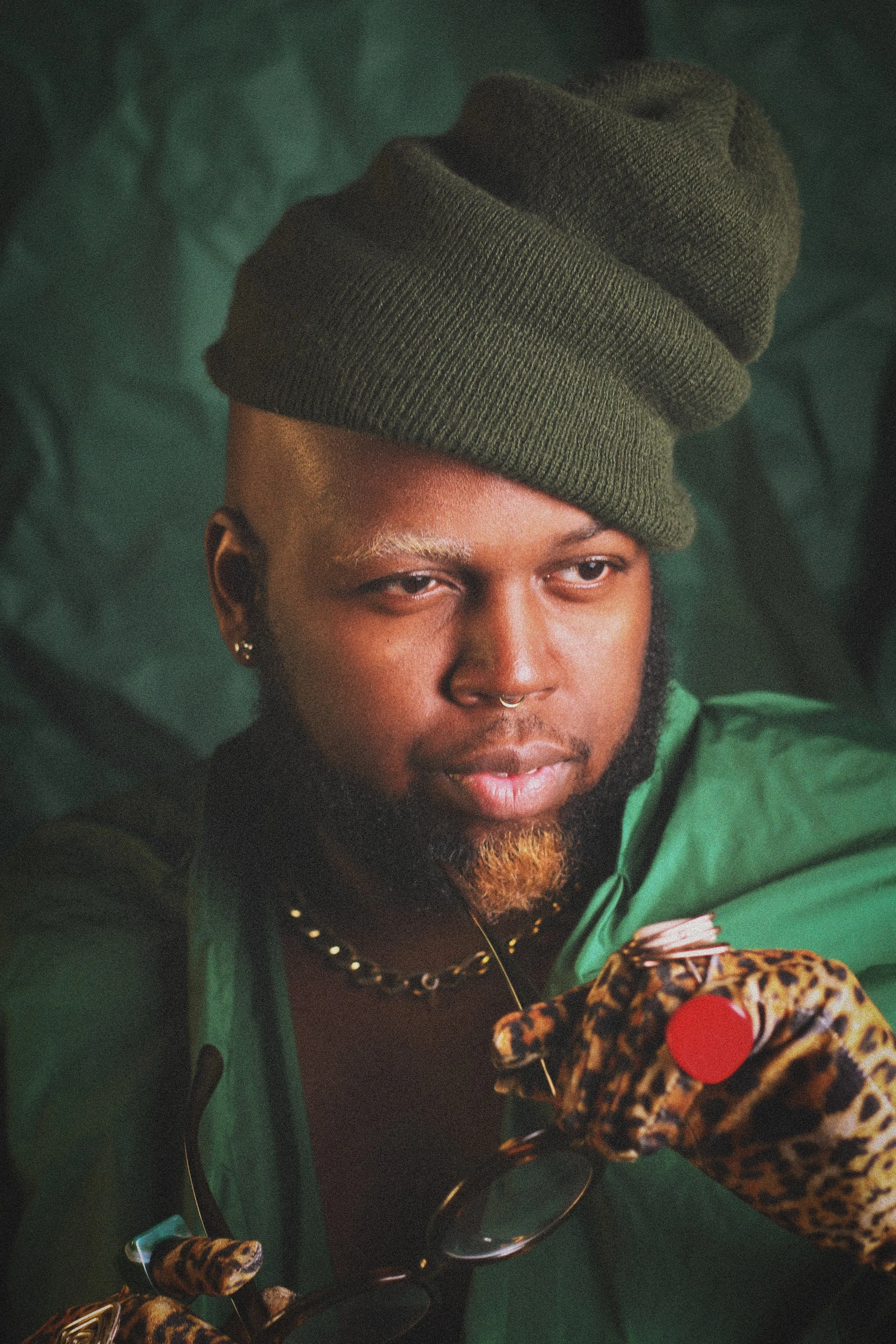
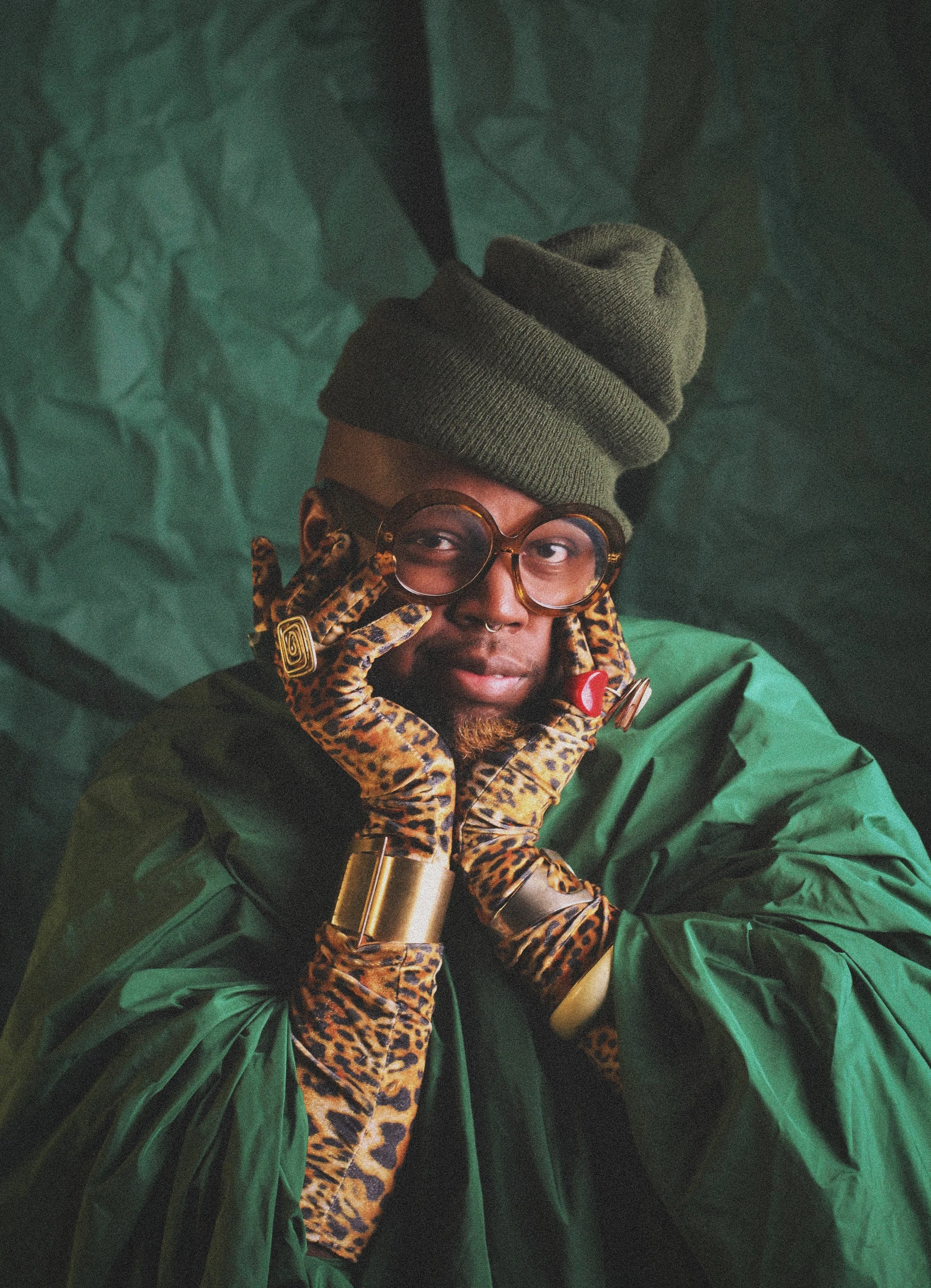
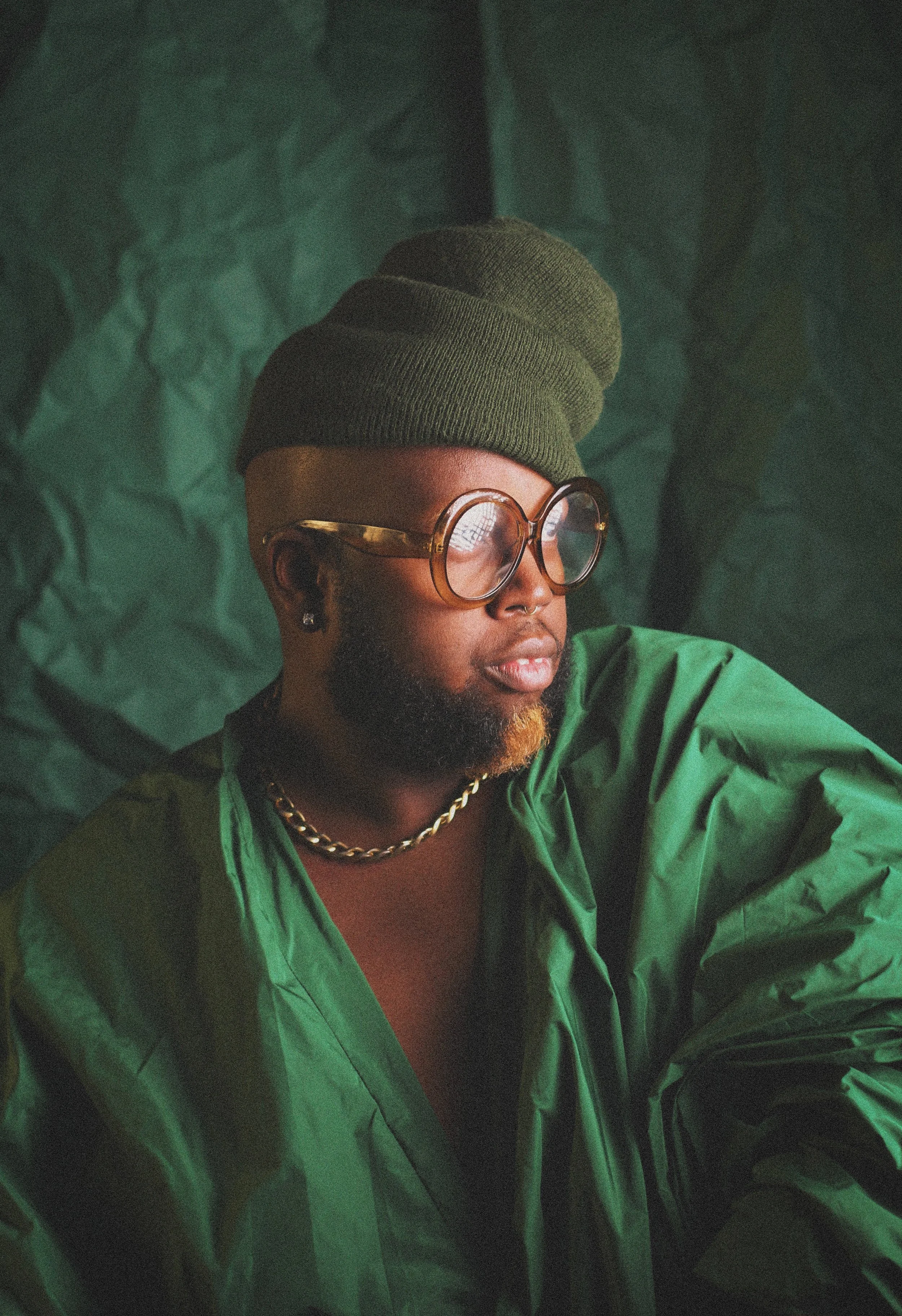
Photos by Morgan Davis
rich rocket
Visual Savant, Curator, Clothing Innovator
Pronouns: He/Him/Heyyyyyy
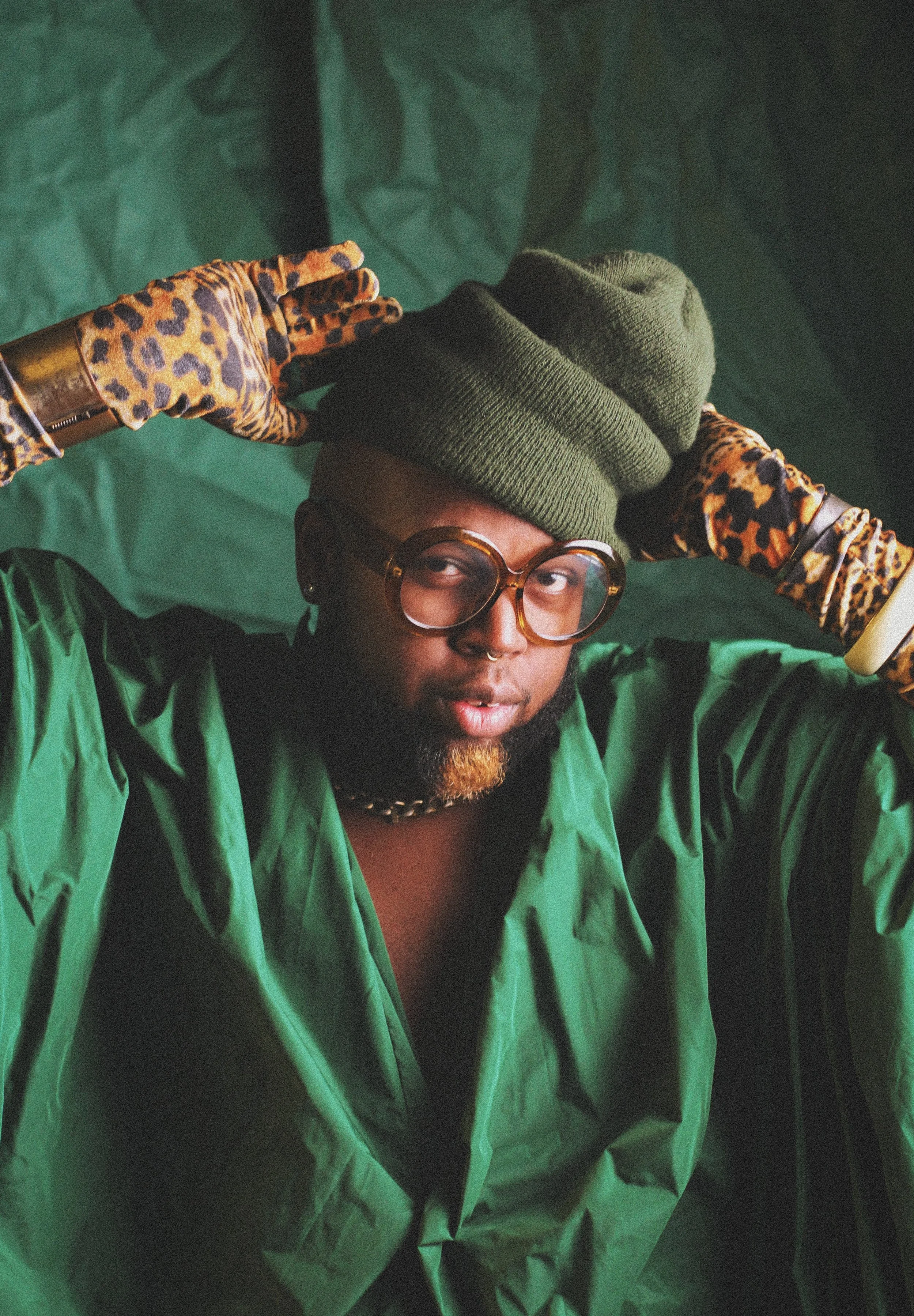
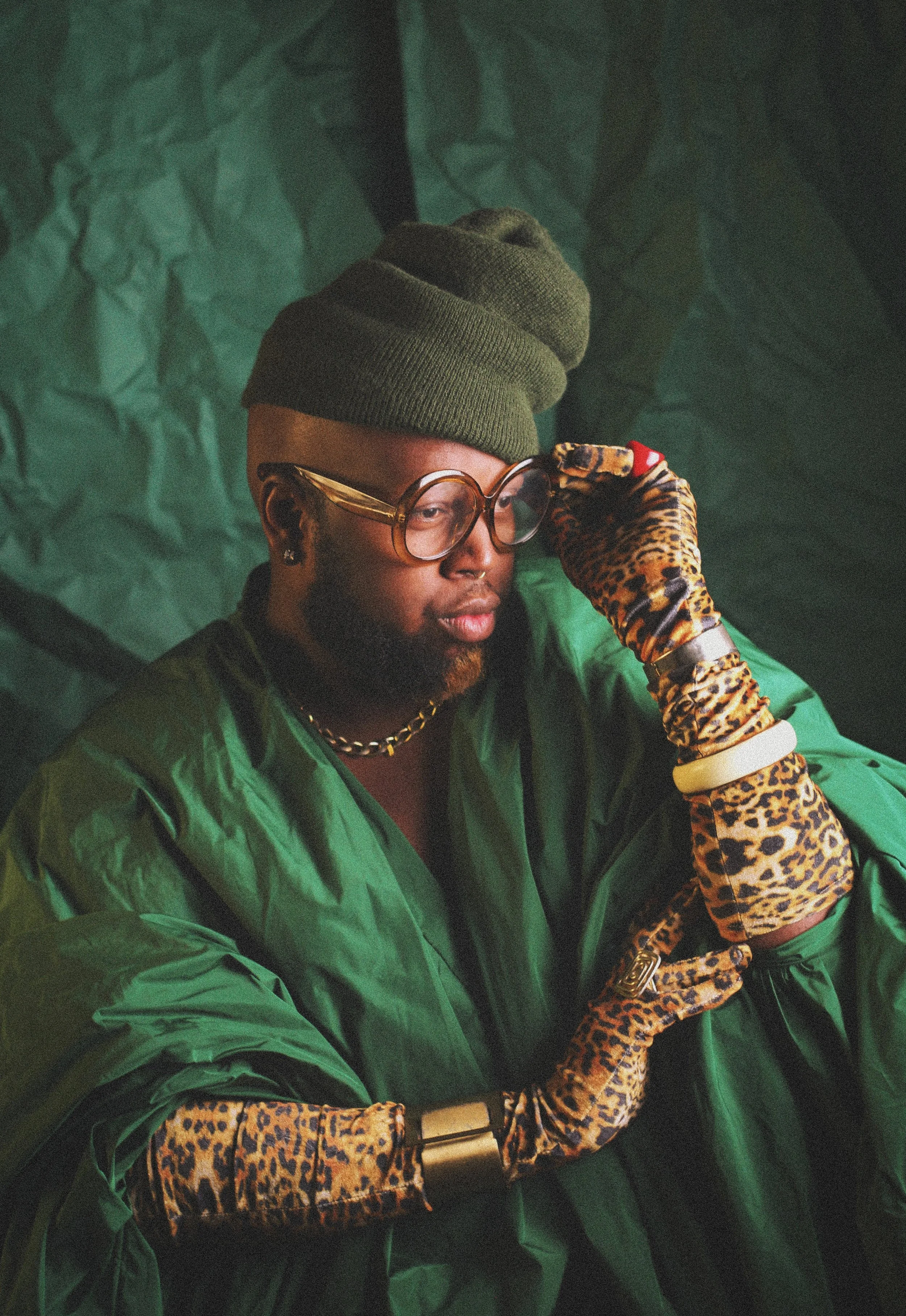
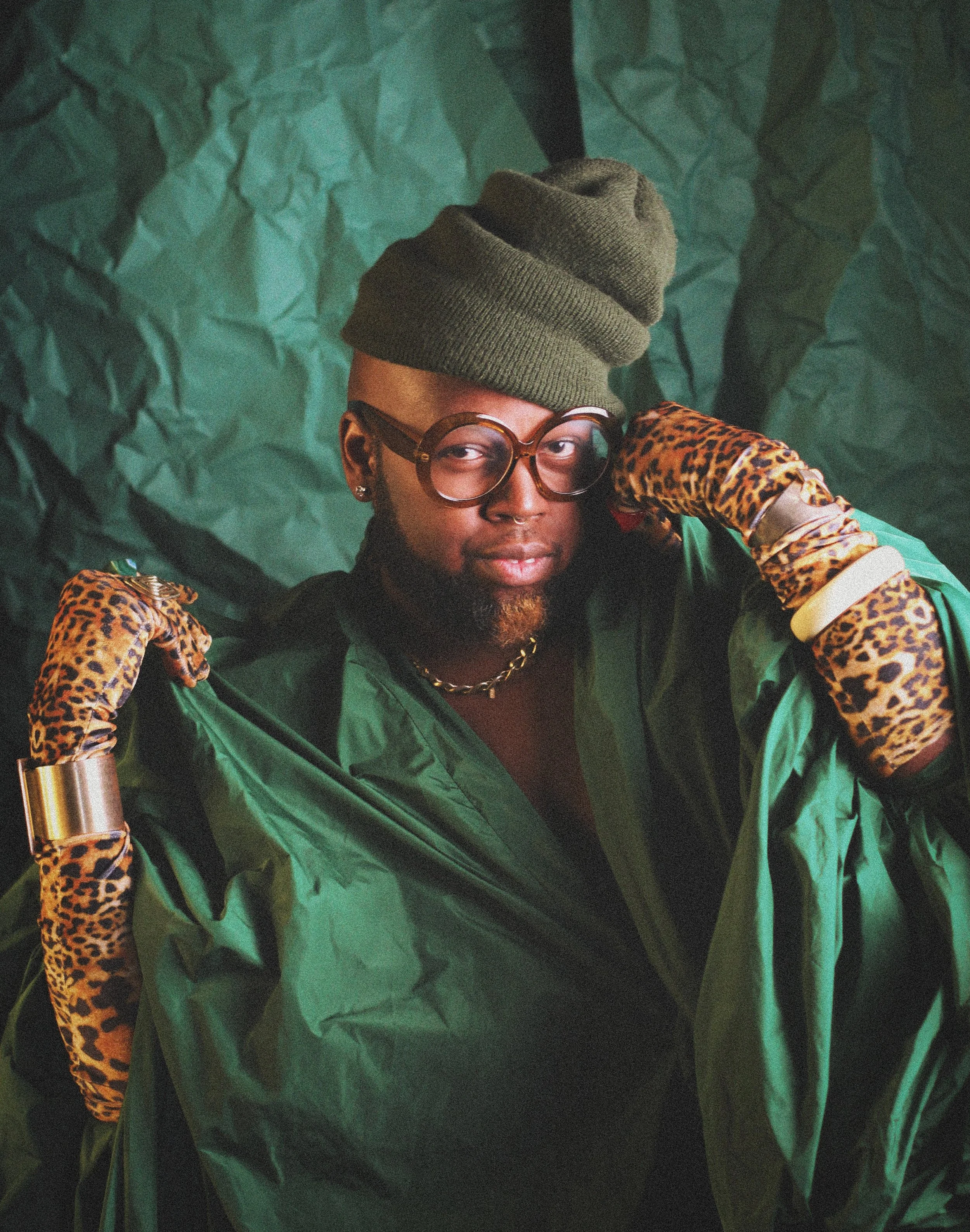
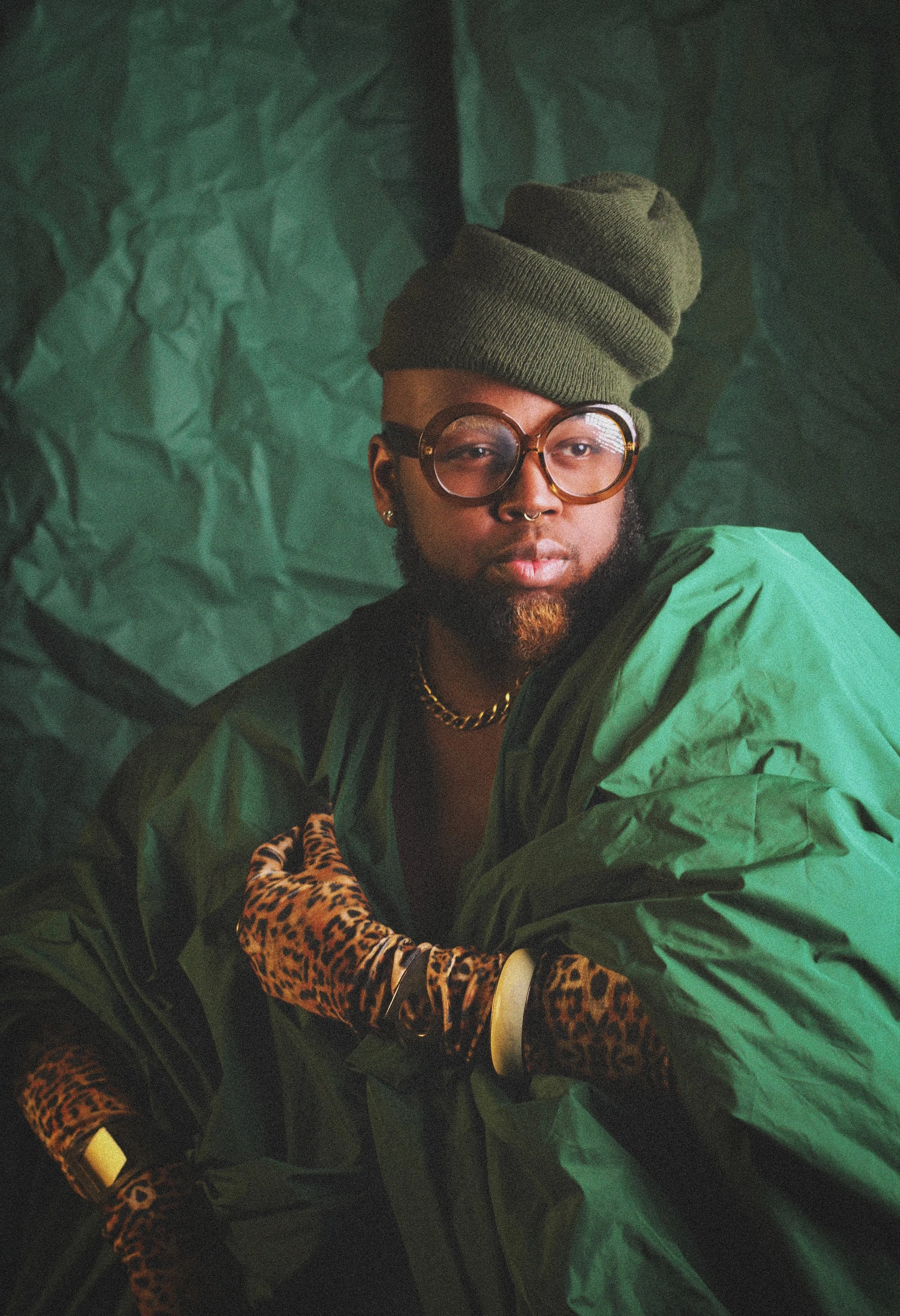
Born in Annapolis, MD and currently based in Baltimore, Rich Rocket is a gay man and a born creator — mastering the art of spinning gold from yarn. A Visual Savant, Story Teller, Event Provocateur, Curator, and most importantly no stranger expressing his personal style, on and off stage. Rich started Rich Rocket Media in 2012, a media company that specializes in Photography, Graphic Design, and Branding, and then Vintage Thrivals in 2017, an innovative Vintage clothing company that turns sustainably sourced clothing into 1 or 1 wearable art! Much like goal of community, this brand aims to celebrate ALL BODIES, all shapes, sizes, and presentations, making inclusion one of the cornerstones of the brand. Rich always considers community in all his efforts and actions! Creating a legacy that will hopefully inspire the next generation to do the same!
M: So, I’d love for you to introduce yourself!
R: All right. I like to call myself the brilliant young thing. Like I'm all the things, but they're all brilliant. So I want you to know that first.
But my name is Rich Rocket. I am 37 years old currently.
And I am the curator of Vintage Thrivals and the curator of Rocket Labs, which is my creative house where there's a showroom and the studio space now.
I just like to make things. I like to tell stories, and I like to help people see themselves in the work that I create.
M: Well, first, I want to start by talking about Rocket Labs — which, again, truly, congratulations!
R: Thank you!
M: So, how do you feel, being a month in now and having this physical commercial space? And also, what has the journey been for you, especially from an emotional standpoint? Because, to my understanding, you were building it from the ground up; it was a full renovation. And that's quite a task.
R: This formerly was a car garage.
M: Oh, really?!
R: Literally, it was just four walls. We didn't even have a roof at first. So part of the building was gifted to me by a mentor. They had been trying to liquidate, and they were ready to move out of Baltimore.
And they were like, “We want you to have this.”
At first I was like, no. Because I've never owned anything in perpetuity outside of my car.
So I'm like, “I don't really know. That's very big boy stuff. I don't know if I'm ready for big boy stuff.”
But they were like, "We believe in you, and we believe in what you can do with this.”
This also happened at the same time I found out about Project Restore through the Black Arts District here in Baltimore. They were literally giving money to people who had buildings that needed renovation.
M: Oh, that’s beautiful.
R: It just kind of felt like, if I don't say yes right now, when will this ever be as aligned as this is? So we took on the journey. And it was about a 15-month journey. I became the owner in January 2025.
And we started building and hiring and in the very beginning of 2026. So that first year was just kind of learning everything and figuring it all out.
Trying to get all the pieces together.
And then this year is when we put the shovel in the ground. I don't know what else to compare it to, and I've never experienced this, but it felt like a pregnancy.
It felt like a 15-month pregnancy.
I had all these woes and ups and downs, where there were times when I was very excited, times when I was very scared, and times when I didn't know what I was doing.
But I was pretending I did, you know, answering a lot of questions. My contractor would ask me stuff, and I'd be like, "That sounds right.”
I'm a person who paints clothes. I don't really know the ins and outs of plumbing or cityscapes or anything like that.
But I learned so much, and part of me appreciates having to learn so much so quickly — like being able to have to make a decision right then and there.
All in all, I feel very complete.
I feel a little fraternal about the space because I have been a part of it since its conception. I remember being in here, sweeping the dirt off the cement when it was just that. So seeing it now with the walls and the doors, it just feels like this is my baby.
M: Outside of technical things that you've learned in this process, is there anything new that you've learned about yourself through this?
R: I think the one thing that I'm always wrestling with or trying to teach myself is having patience. I expect everybody to do things in the way that I want them to be done. And I realize that will never be the case.
So I'm always trying to, without losing my intent, be more patient with people and allowing things to be functional in a way where everybody wins without an emphasis on me losing.
I think that's been the biggest lesson: just patience and learning that sometimes you gotta wiggle a little bit. Sometimes you gotta dance even when you don't like the song.
But all in all, hopefully, it's still gonna be a great party. I think that's the biggest takeaway.
M: So, segueing a bit more into your art, has this process in any way impacted you positively, in terms of how you're viewing Vintage Thrivals going forward?
R: I think in two specific ways.
One, I think I've always considered that the space that I create in affects what I'm actually creating.
Before, it was my home, my apartment — so I was kind of limited in the way I would create because I couldn't do as much there.
But now I have a little bit more free range. I can do whatever I want in this space. So it really is going to open up what people are going to see from the brand because I'll be able to do bigger and better things.
Secondly, with Vintage Thrivals, we always want to make sure that the brand feels accessible.
And I think that's very important because in the fashion space, there are certain brands who thrive on being inaccessible.
I want to explore a space in between where we have things that are just of a different caliber of art.
That's wearable, but without losing our accessibility.
So, now that we have a home, we can say these things are just for the house — and these things are specific to the people who like them or the people who want them.
And we still are who you knew us to be.
M: Going back, in terms of the foundation of Vintage Thrivals, why painting on clothing? Because when I think about fashion and that avenue of things, there are so many different ways you could go about it. But what led you to that?
R: Initially, when I first started Vintage Thrivals, it was just vintage resale. I was buying vintage things and reselling them. I still always painted on my own clothes because, as a larger-bodied person, I often found it hard to find clothes that expressed how I felt about myself.
I’ve always thought that your outfit is your first impression. It's the way people get to know you before they decide if they want to get to know you.
So, I was tired of not being able to express that. I would buy clothes kind of just based on the potential. Then I would take them home and be like, “Okay, now I'm going to distress it. Now I'm going to paint it. Now I'm going to change it so that it feels like something I would wear.”
And I was doing that while I was doing the vintage resale. I would show up to the pop-ups with these clothes, and people would be like, “Oh, this is all nice, but where did you get your shirt? Where did you get your jacket?”
So, then I started integrating little pieces here and there. And then it just became a full ride.
That's how it came to be.
M: From then till now, how has your artistic voice grown when it comes to Vintage Thrivals?
R: Looking back, especially at old photos of people wearing my stuff, I'm like, “People must have really just liked me.”
Because when I was first starting, I was really just trying things. And some of it, as the artist that I am now, would never fly.
However, back then, I'm like, “Yeah, these were my friends.” They were early ideas, very student work kind of ideas.
So, looking back, I'm like, “Oh, man, what a journey that I've been on.”
Now, there are definitely things that people recognize about the brand. And with that awareness, I have to kind of keep up with those ideas while not losing sight of the vision — but also making sure we're being progressive about what we're putting out.
I'm not the first person to paint on clothes. I'm not going to be the last person to do it. But I always make sure that my signature is there.
M: Which it definitely is. I will know it is yours when I'm out and about before I even see the tag or anything.
R: Yeah, there are certain things like my line work or certain prints I make sure that I always include. But making sure that, again, I'm being progressive about how we're putting it on the piece, how it's lining up, what it's looking like, the colors.
All those kinds of things are synonymous with Vintage Thrivals.
M: What's been one of your favorite pieces that you've made so far? Also, what is a piece that maybe you'd want to improve upon that you made in your earlier years?
R: Well, I can't physically say a favorite. They're my children. So, if I say this is my favorite, then the other ones will hear. They'll be fighting.
But one thing I will say: I love trench coats. I love to paint trench coats.
I think that a trench coat can lend itself to a silhouette that looks good on any body. Any shape, any presentation, any body looks good in a trench coat. And then you add the paint to tell a different story.
I think something that I've been making that I probably would improve upon is the Denim Dream. That's where I take a pair of jeans, and I cut them into a top.
I've been doing it for years. I like the way that people love them — especially when trying them on at the pop-ups. I want to get the mechanics down just right because it's a no-sew project — which can lead to a lot of mistakes or imperfections where sometimes it's like, “Okay, that's a part of the look.”
But then sometimes it's like, “No, I made a mistake.” I want to get it down to a point where it's concise enough, where the formula is just there.
M: Looking to the future, what are some pieces that you would love to add to your inventory? And then in general, what are you looking forward to with Vintage Thrivals and Rocket Labs?
R: Well, with Rocket Labs, I'm so excited to expand on the storytelling. I was doing photo shoots in my kitchen before, and they would still be, in my opinion, editorial-type images — but now we have the space and opportunity to really expand on those, along with the tools and technology that we didn't have before.
I'm just really excited to be able to see my visions brighter, and dream a little bit louder. I'm excited to do those things now in this space.
As far as Vintage Thrivals, I'm excited to do more customs. I've always loved doing custom pieces where people come to me and say, I have a show or this event or whatever. I've always loved doing that.
I want to really expand on that. I don't know if I want to go full-on bridal, but definitely not prom dresses. There are a lot of people who do that, and they do it well — but I want to do grander projects.
Things like Freakness. I really want to be able to get my stamp on those spaces.
M: Building upon that, as a Black queer person, how do those intersections show up within your work?
R: I think it leads to a lot of what I do — as I create pieces that help to expel different identities so that nobody feels boxed in by what they see on the rack.
I like that when people walk up to the rack, they're like, "Are these men's or women's clothes?”
And I'm like, exactly. They're clothes.
I also feel that, in certain spaces, we do need to be a little less rigid about identity on things that aren't alive.
You don't question your burger's gender. You just eat the burger.
If we could just move away from that and just go with what we like, what responds to us, what we feel about what we're looking at, I think that we'll be moving to a better future.
That's how I work.
When I create things, I'm not necessarily thinking about whether a man would wear this, would a woman wear this, would a non-binary person respond to this?
I'm just creating art that I hope someone responds to.
I think clothing does not have a gender, but of course, capitalism and a myriad of things regulate you to different aspects
M: Which is something I love about your work: that it is very expansive. Not only in terms of the artwork being expansive itself — but I love being able to see so many different types of people wearing your pieces. I've been at parties, and I've seen two separate people who do not know each other wearing one of your pieces.
I think that's really beautiful.
R: Thank you.
M: So my last question is, when you think of the phrase “To be Determined”, the title of this series, what first comes to mind for you, especially again within the lens of being a Black queer person?
R: I think “To be Determined”; some may see it as a question; I see it as an invitation.
“To be Determined” is so open. It can be anything. It also can be whatever you want to determine. It's perception. It's open-ended.
So I feel “To be Determined” is an invitation to open your mind or receive what's coming for you.